
Sony's latest patent hints at a potential game-changer for future PlayStation consoles: a latency-reducing system powered by AI and additional sensors. The current generation, even with advancements like PlayStation 5 Pro's Spectral Super Resolution (PSSR), faces a trade-off: frame generation techniques, while boosting frame rates, can introduce noticeable lag. This contrasts with solutions from AMD (Radeon Anti-Lag) and Nvidia (Nvidia Reflex), which aim to mitigate this issue.
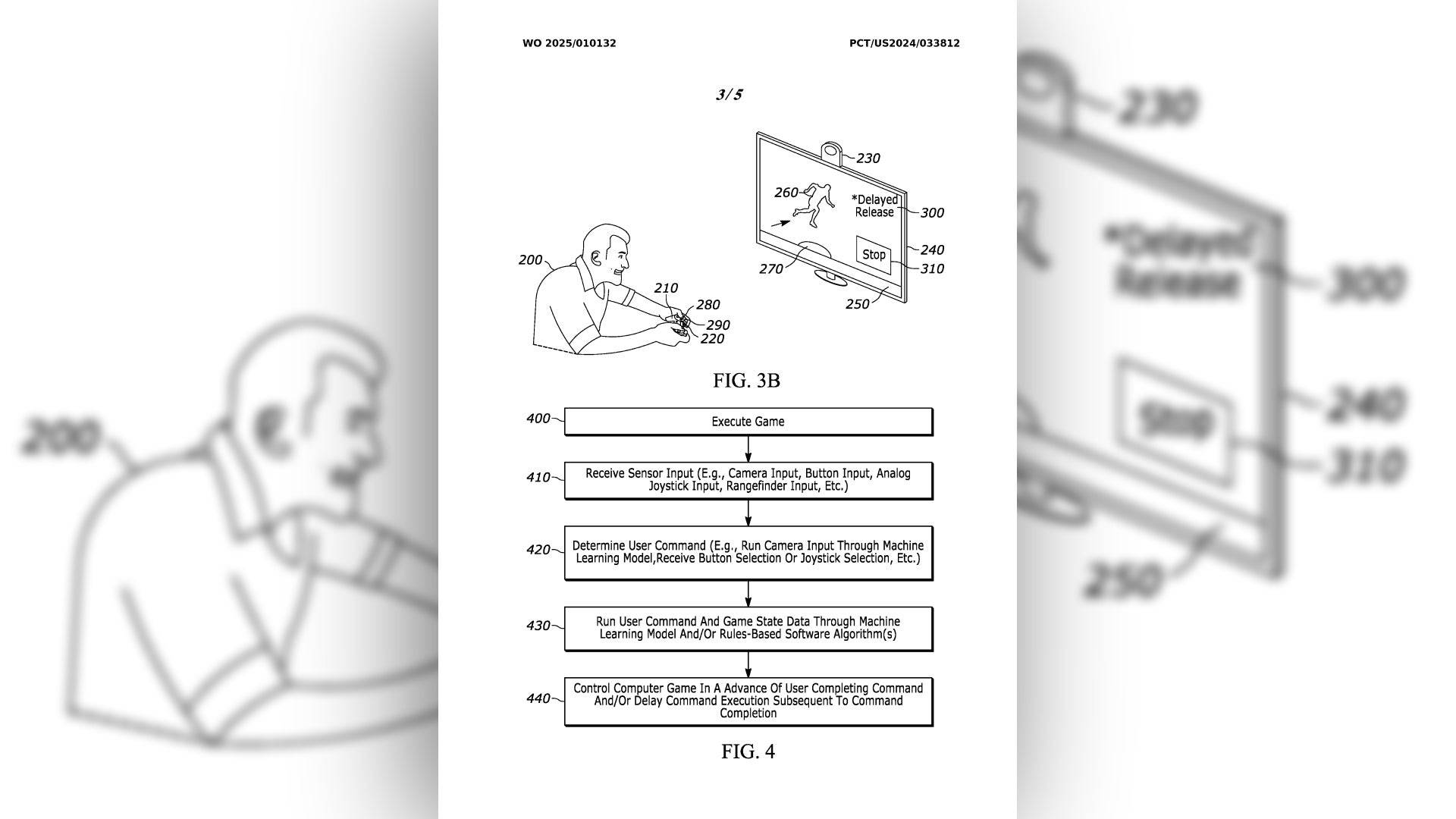
Patent WO2025010132, titled "TIMED INPUT/ACTION RELEASE," tackles latency by predicting user inputs. Sony acknowledges the inherent delay between player action and system response, leading to delayed execution and potential gameplay issues. Their proposed solution involves a machine-learning AI model that anticipates the next button press, aided by an external sensor—potentially a camera observing the controller or even incorporating enhanced functionality within the controller itself.
The patent suggests using camera input to feed the AI model, identifying the player's intended action. Alternatively, the sensor could be integrated directly into a controller button, perhaps leveraging analog input for more precise prediction. While a direct implementation in the PlayStation 6 isn't guaranteed, the patent demonstrates Sony's commitment to addressing latency concerns, especially given the increasing prevalence of frame generation technologies like FSR 3 and DLSS 3, which often add latency.
This technology would be particularly beneficial for fast-paced games requiring both high frame rates and minimal lag, such as twitch shooters. Whether this innovative approach translates into tangible improvements in future PlayStation hardware remains to be seen, but it certainly points towards a future of more responsive and immersive gaming experiences.