Blackjack stands as the most popular table game in casinos worldwide.
Introduction
Blackjack is the most widely played casino table game and is available at virtually every online casino. Its low house edge and manageable variance also make it an excellent choice for fulfilling bonus wagering requirements when permitted.
Rules and Gameplay
Blackjack hands are scored by adding up the values of the cards. For instance, a hand containing a 4, 5, and 6 has a total of 15. Face cards (Jack, Queen, King) are each worth 10 points. An Ace can count as either 1 or 11. Therefore, an Ace and a 7 can be valued as either 8 or 18. The objective is to achieve a card total higher than the dealer's without exceeding 21. A total over 21 is a "bust," resulting in an automatic loss of the bet regardless of the dealer's hand. A two-card 21, known as a "blackjack," is the highest-ranking hand. Players receive a bonus for a blackjack, which typically pays 3:2, while other winning hands pay 1:1.
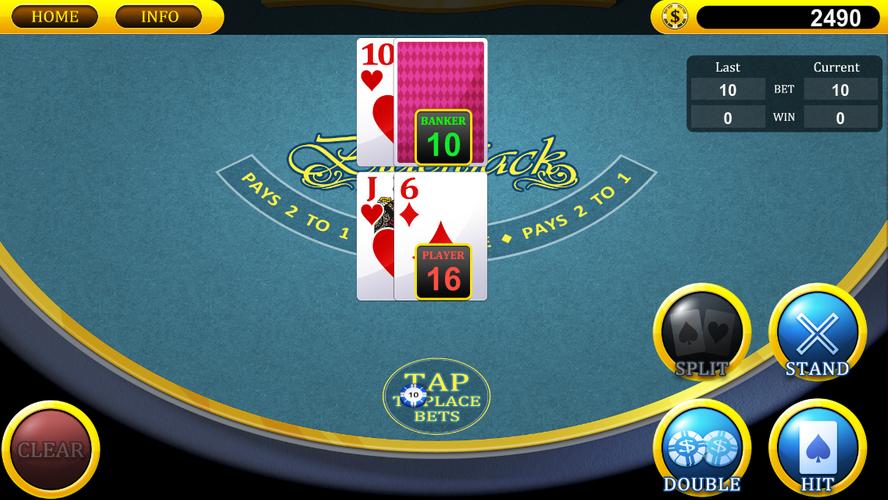
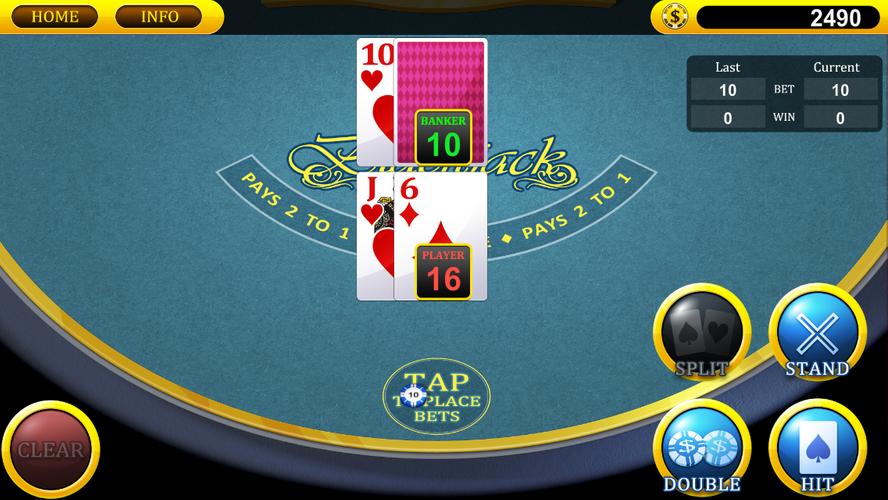
After placing a bet, both the player and dealer receive two cards. One of the dealer's cards is dealt face up for the player to see. Under standard rules, if the dealer's face-up card is an Ace or a 10-value card, they will check ("peek") for a potential blackjack. If the dealer shows an Ace, the player is offered "insurance"—a side bet that pays 2:1 if the dealer's hole card completes a blackjack. However, the house edge on the insurance bet is significant (typically 2-15%, depending on the number of decks and cards in play), making it generally unfavorable for the player. Exceptions occur in specific situations where the remaining deck is known to be rich in 10-value cards, such as in certain single or double-deck games with few tens drawn or when card counting. If the dealer does have a blackjack, the hand concludes. If not, the player decides how to proceed with their hand. The available options are:
Stand — The player keeps their current cards and ends their turn.
Hit — The player draws an additional card. They may continue hitting until they reach 21 or bust.
Double — The player doubles their initial bet and receives exactly one more card, after which their turn ends. Doubling is usually only permitted on a two-card hand, and further hits are not allowed.
Split — If the player's first two cards are of equal value, they can split them into two separate hands, doubling their bet to cover both. Each new hand receives an additional card. If splitting Aces, the hand typically ends after that one additional card per Ace. For other pairs, the player may then hit, stand, or double on each resulting hand according to the casino's rules. Resplits may also be allowed.
Strategy
Despite the game's complex rules, optimal blackjack strategy is surprisingly straightforward. There are no decisions about which specific cards to take; instead, players follow a basic strategy chart based on their hand and the dealer's upcard. This chart dictates whether to hit, stand, double down, or split, minimizing the house edge. Following basic strategy is the cornerstone of successful blackjack play.