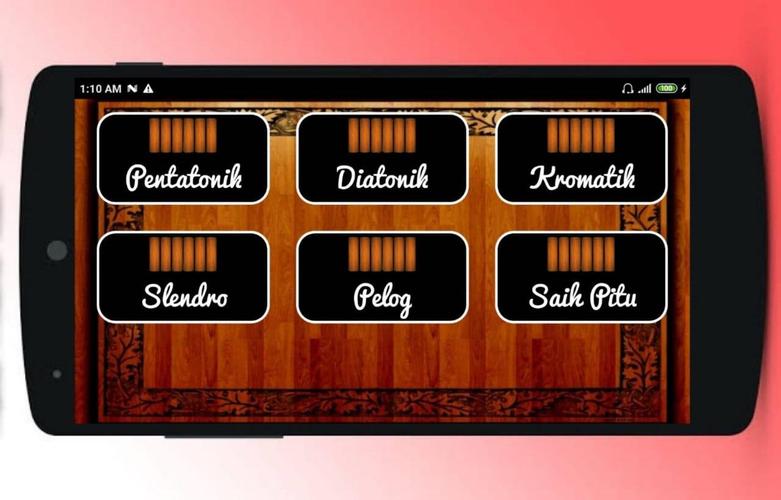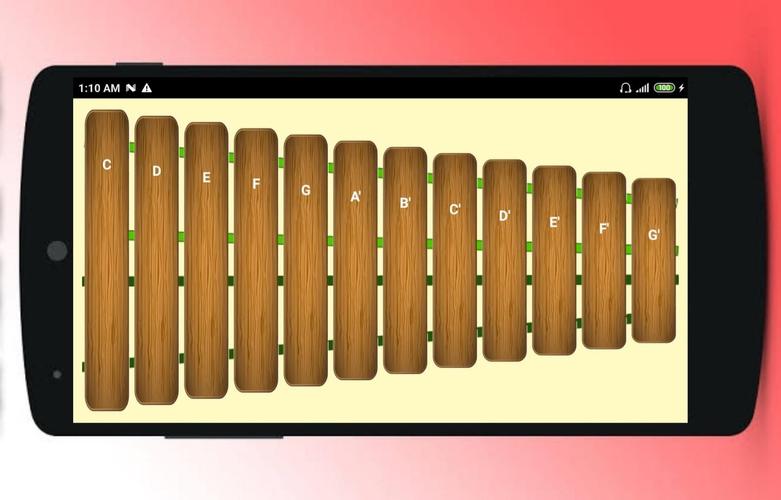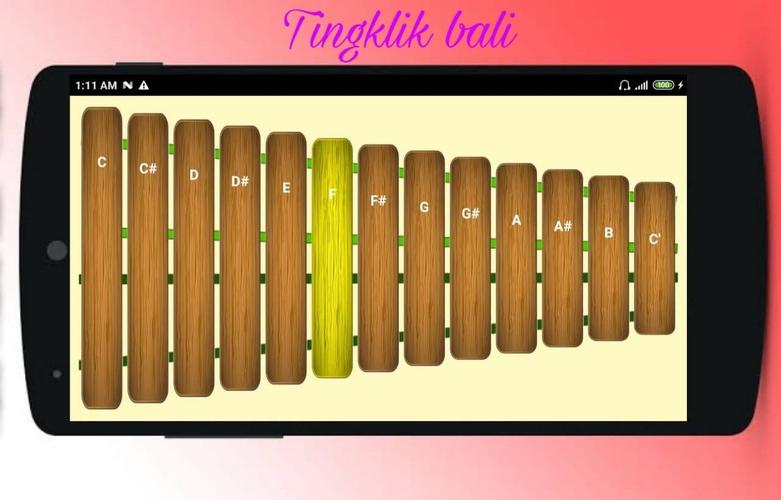
It seems there is a small error in your description regarding the instrument and its playing technique. Let's clarify and correct the information about the tingklik, a traditional Balinese musical instrument:
The Tingklik is indeed a traditional Balinese percussion instrument, but it is not made from bamboo blades struck with a mallet called a "tingklik pelvis"—this term is incorrect and likely a confusion with another instrument.
Here is the accurate information:
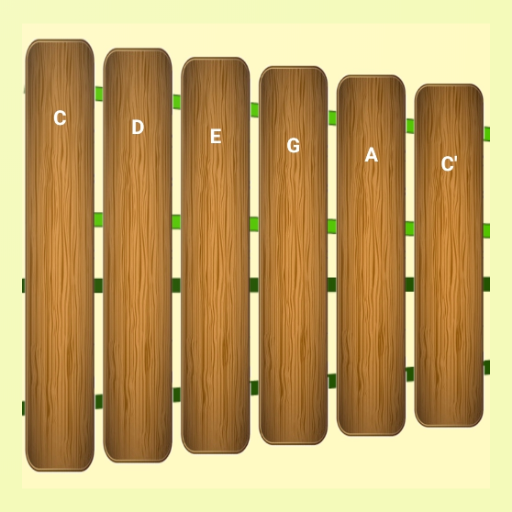
- The tingklik is a metallophone (a type of struck idiophone) made of bamboo or metal bars, typically 11 to 25 in number, arranged in a row and mounted on a frame. These bars are tuned to a specific Balinese scale (such as slendro or pelog).
- It is played by striking the bars with a padded mallet (called a gong gede mallet or sometimes a ceng-ceng mallet), not with the hands. The player uses one or two hands, depending on the setup.
- The tingklik is commonly found in gamelan gong kebyar and gamelan semar pegulingan ensembles, where it plays a melodic and rhythmic role, often contributing to the kotekan (interlocking melodic patterns) that are characteristic of Balinese gamelan music.
- There are two main types:
- Tingklik Polos: Plays a simpler, more straightforward melodic line.
- Tingklik Sangsih: Plays a more complex, interlocking pattern (like a sangsih part), often in counterpoint to the polos.
Important correction: The right and left hand roles you mentioned—such as the right hand playing kotekan and the left hand playing the rhythmic foundation—are more accurately associated with gamelan gong kebyar performers, especially those playing the gong suwukan, kendang, or gangsa. The tingklik is not typically played with one hand doing melody and the other doing rhythm in a separate role.
Additionally, the term "tingklik pelvis" does not exist in Balinese music terminology. The word pelvis is anatomical and not used in this context. The mallet used to play the tingklik might be referred to as a tatah or tumpul, depending on regional or ensemble tradition.
✅ Corrected Summary: The tingklik is a traditional Balinese keyed idiophone made of 11 to 25 tuned bamboo or metal bars, played with a mallet. It is used in gamelan ensembles such as gamelan kebyar and gamelan semar pegulingan, where it contributes to intricate interlocking melodic patterns (kotekan). The two main forms are Tingklik Polos and Tingklik Sangsih, differing in their melodic complexity. It is not played with the hands, and no part of it is referred to as a "tingklik pelvis."
Let me know if you'd like a visual description or audio reference to help understand how the tingklik sounds!